
Compare NFIP and private flood insurance options for your Orlando home and find coverage that fits your property, needs and budget.
Orlando may be far from Florida’s coastline, but that doesn’t put local homes out of reach of serious flooding. Heavy rain can overwhelm drainage systems, raise lake levels, and send water into streets and neighborhoods, especially when a slow-moving tropical system drops a large amount of rain in a short period.
Hurricane Ian was a strong reminder. In 2022, the storm brought widespread flooding to Central Florida, including Orlando. Sixteen inches of rain fell on Orange County, flooding homes, apartments, and roadways and leading to more than 1,700 water rescues. Some homeowners measured nearly two feet of water inside their homes.
Events like Ian show why flood protection matters even when storm surge isn’t part of the equation.
Flood damage isn’t covered by your homeowners insurance policy, but a separate flood policy can help protect your home and belongings from covered losses. At Brown Insurance Services, we help Orlando homeowners compare Florida flood insurance through the NFIP and available private carriers so you can find coverage that works for your property and budget.

We compare NFIP and private flood insurance options so you aren’t limited to a single choice.

Flood insurance helps cover eligible losses your homeowners policy leaves out.

We make it easier to compare coverage, deductibles and pricing without sacrificing protection just to lower the premium.
Request a free quote to see what coverage options are available, then choose what works best for your home and budget.
No obligation. Quick answers from a real agent.
Orlando’s flood risk is driven by more than hurricanes. The city receives more than 53 inches of rain in a typical year, and a single summer thunderstorm can drop 1 to 3 inches in just a few hours. With lakes, low-lying areas and drainage systems throughout the city, that much water can quickly become a problem.
Some parts of Orlando have added challenges. The city has identified flood concerns in older areas such as College Park and Lake Highland Park, where development predates modern stormwater standards and some lake basins have no natural surface outlet for excess water.
And flooding is not limited to properties FEMA considers high risk. More than 40% of NFIP claims come from outside high-risk flood areas, according to FEMA. That’s a good reason to look at flood insurance based on what it can protect, not simply where your home falls on a map.
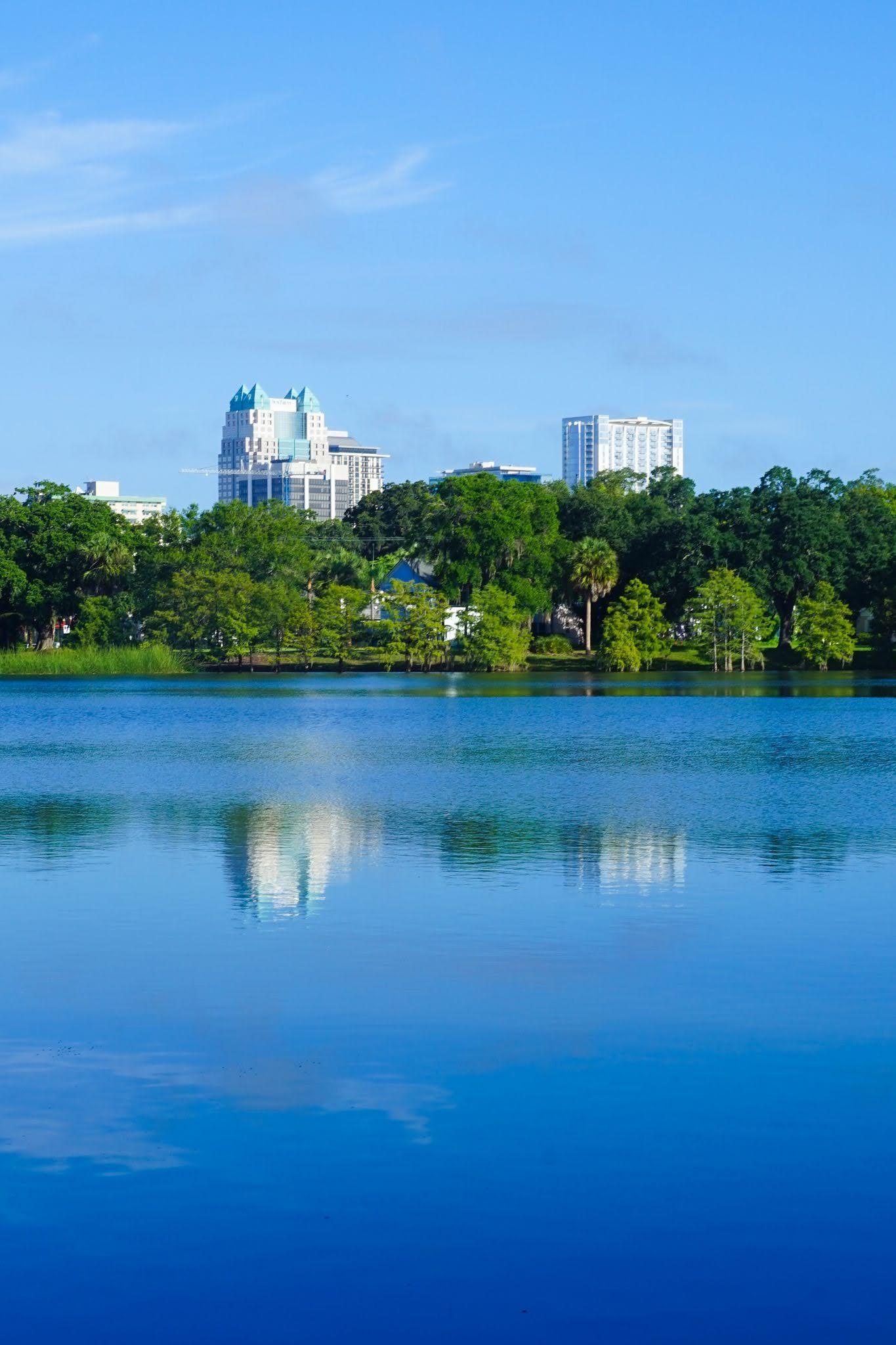

In Orlando, flood risk can change quickly from one property to the next. Homes around lakes, low-lying areas and the Econlockhatchee floodplain may fall into higher-risk areas such as Zone AE, while many nearby properties are mapped Zone X.
The important thing to remember is that Zone X does not mean “no flood risk.” Orlando’s heavy rainfall, lakes, and drainage challenges can still cause flooding outside FEMA’s highest-risk areas. Your flood zone is useful information, but it shouldn’t be the only factor you use to decide whether your home needs protection.
Check your property’s current flood designation, then see what coverage would actually cost. We can help you compare NFIP and private flood insurance so you can make that decision based on real options, not just a letter on a map.

Orlando homeowners may already have a built-in advantage when shopping for flood insurance. The city currently holds a Class 6 rating through FEMA’s Community Rating System, which can give eligible NFIP policyholders up to a 20% discount on flood insurance premiums.
The CRS discount gives eligible Orlando homeowners one more valuable option to consider when comparing flood insurance. NFIP and private policies can differ in price, limits, deductibles, and coverage features, so we look at both to help you find the combination that makes the most sense for your home.
Orlando homeowners aren’t limited to just the National Flood Insurance Program (NFIP) when selecting flood insurance. Private insurers are another path to flood protection, which gives you flexibility when choosing coverage. NFIP policies offer standardized federal coverage and may include Orlando’s CRS discount, while private insurers can offer different limits, deductibles, pricing and coverage features. Looking at both can help you find a policy that better fits your home and budget.
It also helps to start early. New NFIP policies typically have a 30-day waiting period, although certain exceptions apply, including qualifying coverage purchased in connection with a mortgage closing. Private-carrier coverage may start even sooner.
At Brown Insurance Services, we make the comparison easier by showing you the available options and explaining the differences in plain English. That way, you can choose coverage with a clear understanding of both the protection and the price.

Flood insurance can protect more than just water-damaged walls and floors. Depending on the policy, it may also help cover belongings, appliances, cleanup costs and other eligible flood-related losses.
Helps cover repairs to the structure of your home—including foundation elements, electrical and plumbing systems, HVAC equipment, and major appliances (like water heaters) damaged by flooding.
Helps cover the cost to repair or replace belongings such as furniture, clothing, electronics, and appliances damaged by flooding.
Helps cover removal of flood-damaged materials and cleanup-related costs (like tearing out and hauling away damaged items), depending on the policy.
If your home is unlivable after a covered flood loss, some policies may help with temporary housing and related living costs.
*Not available on all policies.
If you rent out all or part of your property, some policies may help cover lost rental income when the space becomes unlivable due to a covered flood loss.
*Not available on all policies.
Helps pay for certain required upgrades to meet current building codes after a covered flood loss, when applicable.
As of Jan. 1, 2027, most Citizens Personal Residential policies that include wind coverage must also maintain flood insurance, regardless of the home’s value. Certain condo unit-owner, tenant contents, and policies without wind coverage are exempt.
If you have Citizens, we can help you compare NFIP and private flood insurance options so you can meet the requirement with coverage that also makes sense for your Orlando home and budget.
Flooding is the most common natural disaster in the United States. From coastal storms to inland flooding, proper flood coverage protects your most valuable investment.
Don’t wait until it’s too late, get the protection you need today.

Flooding can be expensive, but the right coverage can help protect your home, belongings and finances from covered losses. We make it easier to compare NFIP and private flood insurance options and choose protection that fits your Orlando home and budget.
As an independent agency, we can shop across multiple insurance markets instead of pointing you toward a single option. We’ll explain the differences in plain English, compare coverage and cost side by side, and help you choose a policy without cutting protection just to reach a lower premium.
And because new NFIP policies typically come with a 30-day waiting period, it pays to get coverage in place before you need it.
Orlando • Winter Park • Maitland • Altamonte Springs • Apopka • Ocoee • Winter Garden • Windermere • Lake Buena Vista • Kissimmee • Celebration • Sanford • Lake Mary • Oviedo • Casselberry
Get answers to the most common questions about flood insurance and how we can help protect your biggest investment.
It can be. Flood insurance is required for certain Citizens policies as well as properties in FEMA Special Flood Hazard Areas (SFHA) when the home is financed through a federally regulated or backed lender. Your lender may also have its own requirements.
Even when no one requires it, flood insurance can still be a smart way to protect your home from a loss your homeowners policy does not cover. Orlando’s heavy rainfall, lakes and drainage challenges can cause flooding well beyond the areas FEMA considers highest risk. In fact, FEMA says about 40% of NFIP claims occur outside high-hazard flood areas.
Because homeowners insurance does not cover flood damage, a separate flood policy can give you another layer of protection whether your lender requires it or not.
In Orlando, Zone AE marks a higher-risk flood area, while Zone X is used for areas with lower mapped flood risk. Around Orlando’s lakes and other low-lying areas, those designations can change over relatively short distances.
However, Zone X does not mean zero risk. Orlando homeowners in either zone can benefit from checking their actual property and seeing what flood coverage would cost rather than relying on the map designation alone.
Yes. Orlando currently participates in FEMA’s Community Rating System at Class 6, which the city says can provide eligible policyholders with a 20% discount on flood insurance premiums.
That gives Orlando homeowners another valuable option to consider when comparing NFIP and private flood insurance. We can help you look at the available coverage and pricing side by side.
New NFIP flood policies typically have a 30-day waiting period before coverage takes effect, although certain exceptions apply.
Private flood insurers may use different effective dates, so starting early gives you more time to compare options and get protection in place.
Flood insurance pricing can depend on your home’s location, elevation, distance to flooding sources, construction details, coverage limits, deductible, and the type of policy you choose. Orlando’s CRS participation can also reduce eligible NFIP premiums.
Because two nearby homes can still receive very different quotes, the fastest way to know what coverage may cost is to compare options for your specific property. You can also learn more in our Florida flood insurance cost guide.
Request your quote now to see flood coverage options for your Orlando home—and get clear guidance on the best fit before you’re scrambling when the weather turns.